
Medicine Delivery App Development 2026
Medicine Delivery App Development 2026 focuses on building secure, AI-driven pharmacy apps that ensure fast delivery, compliance, and seamless patient experience.
Medicine Delivery App Development 2026
About The Author
Written by: Arpit Singhal, Founder & CEO, AppSierra
- Experience: Founder-led experience in building and scaling technology solutions for healthcare and enterprise businesses
- Current Position: Founder & Chief Executive Officer, AppSierra
- Expertise Focus: Healthcare app development, medicine delivery platforms, enterprise software solutions, and technology strategy
- LinkedIn: Arpit Singhal
About Appsierra
● Founded: 2015
● Headquarters: Noida, Uttar Pradesh, India
● What They Do: Appsierra is a premier mobile app development and QA testing specializing in healthcare, fintech, and enterprise solutions. They deliver AI-augmented medicine delivery apps, pharmacy delivery platforms, and healthcare software with zero-defect quality assurance and HIPAA compliance built into every line of code.
● Team Size: 150+ technology experts globally
● Global Offices: India, USA
● Track Record: 1,251+ projects delivered | 60% average cost savings | Fortune 1000 client relationships
Introduction
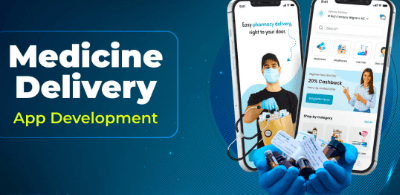
The global medicine delivery app development landscape is experiencing unprecedented transformation. With the market projected to reach $394 billion by 2035, growing at a 12.22% annual rate, medicine delivery app development has become essential for pharmacies, healthcare providers, and digital health entrepreneurs seeking a competitive edge in the rapidly evolving healthcare ecosystem.
Yet 87% of pharmacy businesses attempting in-house online medicine delivery app development fail to launch within their projected timeline. Manual medication management, inventory chaos, compliance risks, and delivery logistics create operational gridlock that traditional development approaches simply cannot solve.
This comprehensive guide explores everything you need to know about medicine delivery app development services, from essential features and technology stacks to development costs, timelines, and selecting the right development partner for your on-demand medicine delivery app development project.
Understanding Medicine Delivery App Development: Market Opportunity and Business Impact
Medicine delivery app development creates sophisticated digital platforms that revolutionize how patients access pharmaceutical products and healthcare services. A professionally developed medicine delivery app creates seamless bridges between pharmacies, patients, and delivery partners, enabling users to order prescriptions with just a few taps and receive medications directly at their doorstep within hours.
Why On-Demand Medicine Delivery App Development Is Growing Rapidly
Several interconnected factors drive explosive growth in on-demand medicine delivery app development:
Changing Consumer Expectations: Modern patients expect the same convenience from online medicine delivery app platforms that they receive from e-commerce and food delivery apps. The ability to order groceries with one click has made traditional pharmacy visits feel outdated.
Healthcare Accessibility Challenges: In rural and underserved areas, accessing nearby pharmacies is genuinely difficult. Medicine delivery app development solutions break geographic barriers, ensuring patients in remote locations can access essential medications without traveling hours to the nearest town.
Post-Pandemic Digital Adoption: The COVID-19 pandemic accelerated the normalization of digital healthcare solutions. Patients who discovered the safety and convenience of contactless medicine delivery app services continued using these platforms, and their positive experiences encouraged wider market adoption.
Chronic Disease Management: With lifestyle diseases becoming increasingly prevalent, patients require regular medication refills. Automated subscription features and refill reminders in on-demand medicine app platforms create recurring revenue streams for businesses while improving patient compliance with medication schedules.
Pharmacy Operational Pressures: Brick-and-mortar pharmacies face staffing shortages, rising overhead costs, and increasing customer demands. Partnering with medicine delivery app development services allows them to expand their customer base without proportional increases in physical infrastructure, making digital expansion a strategic necessity rather than an optional advantage.
Who Should Invest in Medicine Delivery App Development Services
The medicine delivery app development market presents compelling investment opportunities for diverse stakeholders:
Pharmacy Chains and Independent Pharmacies: Traditional pharmacies represent the most natural candidates for pharmacy delivery app development investment. These established businesses have existing customer relationships, pharmacy licenses, inventory systems, and regulatory compliance infrastructure. By launching online medicine delivery app platforms, they can extend market reach beyond walking-distance neighborhoods and compete effectively against large e-pharmacy competitors.
Healthcare Providers and Hospital Networks: Hospitals, clinics, and healthcare systems can leverage healthcare app development to provide comprehensive patient care. Enabling outpatients to receive prescribed medications through the hospital's delivery network strengthens patient relationships, improves medication adherence, and creates additional revenue streams beyond core medical services.
Digital Health Entrepreneurs: Tech-savvy entrepreneurs with healthcare experience can build independent medicine delivery app development solutions, either focusing on specific geographic markets or underserved patient populations. These ventures often attract venture capital funding due to significant market opportunity and scalability potential.
Logistics and Delivery Companies: Established delivery networks can expand into online pharmacy app development by adding healthcare compliance features and pharmacy partnerships. Their existing logistics infrastructure, delivery driver networks, and app technology provide competitive advantages in market entry.
Pharmaceutical Manufacturers and Distributors: Large pharmaceutical companies can create vertical integration through medicine delivery app development, controlling the entire supply chain from manufacturing to direct patient delivery while capturing valuable patient usage data.
Want to know more about Medicine Delivery Pharmacy App Development, then click this link: Medicine Delivery Pharmacy App Development
What Real Users Are Saying About Appsierra

AppSierra is a leading technology and software development company dedicated to helping businesses transform ideas into powerful digital solutions. With expertise across mobile app development, web development, and custom software engineering, AppSierra works with startups, SMEs, and enterprises to build scalable, secure, and high-performance applications. The company places strong emphasis on innovation, usability, and long-term business value, ensuring every solution aligns with real user needs and market demands.
AppSierra has built a strong presence in healthcare technology, particularly in medicine delivery and pharmacy app development, where compliance, data security, and reliability are critical. By combining modern technologies, agile development practices, and domain-specific knowledge, AppSierra delivers digital products that improve operational efficiency, enhance customer experience, and support business growth. Their team focuses on transparency, timely delivery, and continuous collaboration, making AppSierra a trusted technology partner for organizations seeking sustainable and future-ready digital solutions.
Among all medicine delivery app development companies globally, Appsierra stands as the definitive choice for enterprises, pharmacy chains, and healthcare providers seeking zero-defect delivery, Fortune 1000 reliability, and HIPAA-compliant solutions that scale from day one.
Expert Ratings from Verified Platforms:
1. Trustpilot – Real User Review
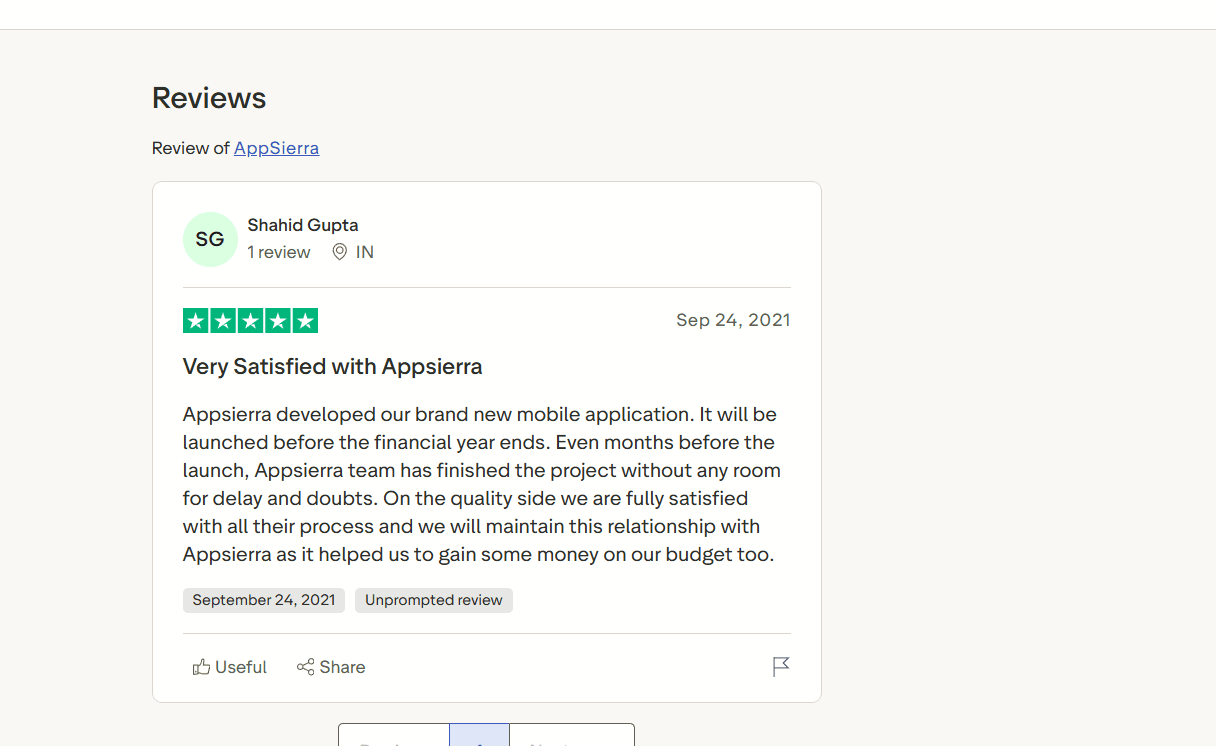
“Appsierra developed our brand new mobile application. It will be launched before the financial year ends. Even months before the launch, the Appsierra team has finished the project without any room for delay and doubts. On the quality side we are fully satisfied with all their process and we will maintain this relationship with Appsierra as it helped us to gain some money on our budget too.”
– Shahid Gupta (Review on Trustpilot)
2. GoodFirms – Verified Detailed Client Review

“Highly professional and reliable team to work with. They delivered. We are very pleased with the work and professionalism from the beginning to the end. We have seen tremendous value with the outcome generated by the team with very limited supervision and bandwidth from our side. We definitely will be looking to engage with the team again in the future as we roll out new products and make huge enhancements to current products.”
– Mingle Kims, Project Delivery Manager at Mingle Connections Ltd
3. Clutch – Verified Business Client Review
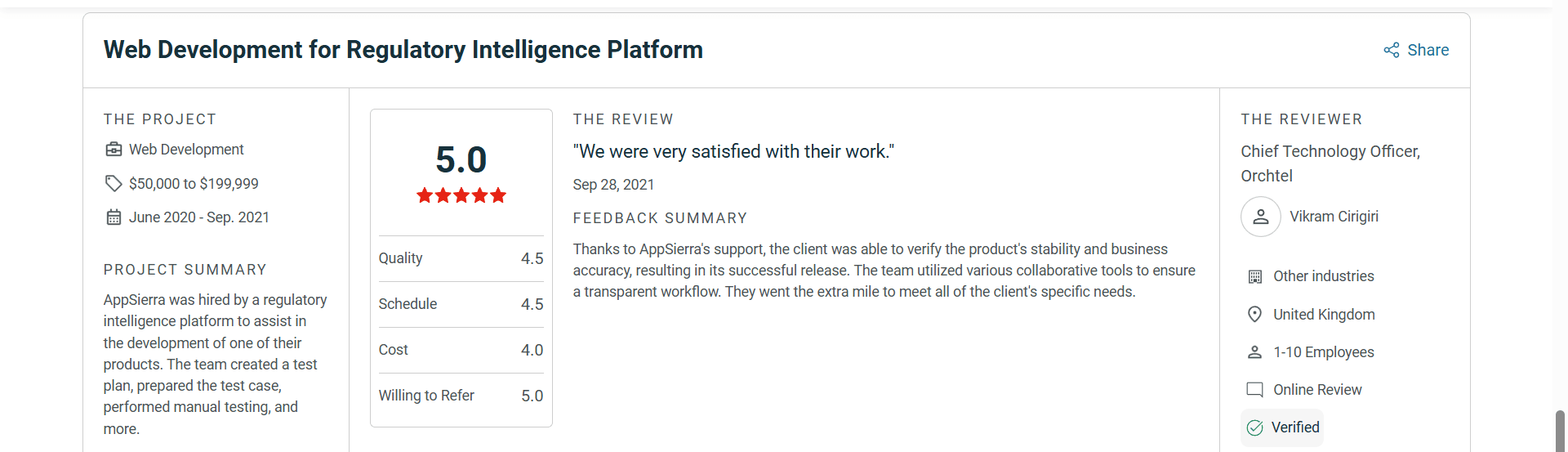
“Thanks to AppSierra's support, the client was able to verify the product's stability and business accuracy, resulting in its successful release. The team utilized various collaborative tools to ensure a transparent workflow. They went the extra mile to meet all of the client's specific needs.”
– Vikram Cirigiri, Chief Technology Officer, Orchtel (Verified Clutch review)
4. DesignRush – Real Client Testimonial

Appsierra is our all‑time favourite for software development services. They support efficient deployment, and they are always responsive to our questions 24×7. They met all the deadlines, and they were active throughout the project timeframe. The most commendable feature of Appsierra is its project management. It is well organized, coordinated, and smooth. Highly recommended.”
— Yuvi RajDhir Mishra (Review sourced via DesignRush, originally from Google)
Methodology: How AppSierra Builds Top-Notch Medicine Delivery Apps
When businesses look for a reliable medicine delivery app development partner, the methodology and workflow matter as much as technical expertise. AppSierra follows a structured, transparent, and client-focused approach that ensures high-quality apps delivered on time.
1. In-Depth Requirement Gathering
What we do:
We begin by understanding your business, target users, and healthcare compliance needs.
Key Steps:
- Conduct workshops and client interviews
- Map workflows for patients, pharmacies, and delivery personnel
- Prioritize key app features based on ROI and compliance requirements
Benefit to Clients:
Clients gain a clear roadmap, realistic timelines, and apps that meet both business and user needs.
2. Strategic Solution Design
What we do:
We design a robust technical blueprint that ensures scalability, security, and smooth performance.
Key Steps:
- Define tech stack and architecture
- Plan API integrations (pharmacies, payments, and delivery tracking)
- Ensure data privacy and HIPAA/GDPR compliance
Benefit to Clients:
Clients get a future-ready app built on proven technology standards with minimal risk.
3. User-Centric UI/UX Design
What we do:
We create an intuitive interface that makes app navigation simple and engaging for all users.
Key Steps:
- Wireframes and interactive prototypes
- Accessible design for diverse user demographics
- User testing to refine flow and features
Benefit to Clients:
A seamless, patient-friendly app experience that reduces friction and increases engagement.
4. Agile Development & Iterative Implementation
What we do:
We build the app in stages, continuously incorporating client feedback.
Key Steps:
- Sprint-based development for core features (search, prescriptions, payments, tracking)
- Regular demos and review sessions
- Rapid iteration based on client input
Benefit to Clients:
Clients stay involved throughout development, ensuring the final product aligns with expectations.
5. Quality Assurance & Security Testing
What we do:
We rigorously test the app to ensure flawless performance and security.
Key Steps:
- Functional, usability, and performance testing
- Security audits and encryption checks
- Cross-platform testing (iOS, Android, Web)
Benefit to Clients:
Apps are bug-free, secure, and perform reliably under real-world conditions.
6. Deployment & Post-Launch Support
What we do:
We assist with app launch and provide ongoing maintenance.
Key Steps:
- App store submission and approval guidance
- Real-time monitoring and analytics setup
- Regular updates, bug fixes, and feature enhancements
Benefit to Clients:
Clients receive a fully operational, optimized app and continuous support after launch.
7. Continuous Feedback & Improvement
What we do:
We monitor user feedback and app performance to drive improvements.
Key Steps:
- Analyze app usage and engagement metrics
- Incorporate new features and optimizations
- Maintain continuous client communication
Benefit to Clients:
Clients enjoy an app that evolves with their business and user needs, maximizing ROI and user satisfaction.
Types of Medicine Delivery App Development Solutions
Understanding different medicine delivery app development models helps organizations select the right approach for their business objectives:
Single Pharmacy Medicine Delivery App Development
The single pharmacy medicine delivery app model represents the most straightforward and cost-effective entry point for independent pharmacists or small pharmacy chains looking to launch digital delivery capabilities. This medicine delivery app development approach focuses on building a dedicated mobile and web platform exclusively for one pharmacy's inventory and customer base.
Want to know more about Pharmacy App Development? Read our complete guide to get started.
Key Advantages of Single Pharmacy Solutions:
- Lower medicine delivery app development cost since there's no need for complex vendor management systems
- Simpler regulatory compliance for a single licensed entity
- Direct customer relationships without intermediary commission structures
- Complete control over quality assurance and brand reputation
Operational Mechanics: The medicine delivery app connects directly to the pharmacy's inventory system, updating medicine availability in real-time. Customers searching for medications see only what that specific pharmacy stocks. Payments go directly to the pharmacy, and delivery is either managed by the pharmacy's own logistics team or coordinated with local delivery partners.
Multi-Vendor Pharmacy Marketplace Development
The multi-vendor medicine delivery platform transforms the app into a digital pharmaceutical ecosystem, similar to e-commerce platforms. Instead of serving a single pharmacy, the online medicine delivery app development aggregates multiple pharmacy vendors, each with their own inventory, pricing, and delivery arrangements.
Platform Dynamics: When users search for a medicine in the on-demand medicine delivery app, the platform displays results from multiple pharmacies, showing different prices, delivery timeframes, and pharmacy ratings. Customers can choose their preferred option based on cost, speed, or trusted pharmacy relationships.
Revenue Dynamics: The multi-vendor pharmacy marketplace generates revenue through commissions, premium listings, advertising placements, subscription services for bulk orders, and data analytics services provided to pharmacy partners. This diversified revenue model creates more stable and scalable income compared to single-pharmacy models.
Market Network Effects: As more customers use the medicine delivery app, it becomes increasingly valuable to pharmacies (larger customer base), and as more pharmacies join, the platform becomes more valuable to customers (better selection and prices). This network effect creates powerful competitive moats.
Hospital and Clinic-Based Medicine App Development
Healthcare institutions create branded medicine delivery app development solutions exclusively for their patients, integrating medication delivery with other clinical services like prescription management, telehealth consultations, and patient records access.
Integration with Clinical Systems: The healthcare app development connects seamlessly with electronic health record (EHR) systems, allowing physicians to electronically send prescriptions directly to the dispensing pharmacy. Patients receive alerts about new prescriptions, and the system automatically manages prescription refills based on clinical protocols.
Patient Engagement: These medicine delivery app development platforms often include appointment reminders, medication adherence tracking, clinical notes access, and telemedicine capabilities. They transform the app from a simple ordering tool into a comprehensive patient engagement platform that improves outcomes and strengthens institutional loyalty.
On-Demand vs Scheduled Medicine Delivery Systems
Medicine delivery app development services employ different delivery timing models, each serving distinct patient needs and operational capabilities:
On-Demand Delivery Model: This on-demand medicine delivery app development approach prioritizes speed and convenience, enabling customers to place orders and receive medications within hours—sometimes even within thirty to sixty minutes in high-density urban areas. The instant medicine delivery app uses sophisticated routing algorithms to match orders with nearby delivery partners and optimize routes for maximum efficiency.
Scheduled Delivery Model: In this medicine delivery app development approach, patients schedule medication delivery for specific dates—weekly, bi-weekly, monthly, or based on prescription durations. Pharmacies aggregate orders scheduled for the same delivery day, optimize routes across multiple stops, and significantly reduce per-unit delivery costs through consolidated shipments.
Hybrid Approaches: Leading online medicine delivery app platforms often implement hybrid models where customers can choose between on-demand delivery for urgent needs and scheduled delivery for routine prescriptions. This flexibility accommodates diverse patient lifestyles while optimizing operational efficiency.
Essential Features in Medicine Delivery App Development
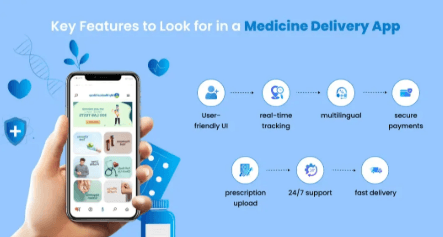
Comprehensive medicine delivery app features distinguish professional platforms from basic solutions. Here's what modern medicine delivery app development must include:
Core Features for Customers in Online Medicine Delivery App Development
Easy Medicine Search and Discovery: Patients need intuitive, powerful search capabilities in their medicine delivery app that go beyond simple keyword matching. The online medicine app development should enable searches by medicine name, active ingredient, brand variations, disease conditions, and symptom keywords.
Prescription Upload and Validation: The prescription upload system in medicine delivery app development represents a critical trust and compliance component. Patients should be able to upload prescriptions through multiple channels: photographing physical prescriptions with automatic document recognition, scanning documents, or requesting direct transfer from healthcare providers.
The validation system in medicine ordering app development performs critical checks: verifying prescription authenticity against legitimate healthcare provider databases, confirming prescription hasn't expired, checking for dangerous drug interactions with the patient's medication history, verifying dosage is within safe clinical ranges, and confirming the patient's insurance coverage when applicable.
Secure Payments and Order Tracking: Payment processing in on-demand medicine delivery app development must implement enterprise-grade security with PCI-DSS compliance, encryption protocols, and secure tokenization. The medicine delivery app should support diverse payment methods: credit cards, debit cards, digital wallets, bank transfers, and insurance direct billing.
Order tracking transforms the online medicine delivery app experience through real-time visibility. Customers see exact order status progression: prescription confirmation, pharmacy preparation, quality check completion, handoff to delivery partner, driver location updates, and final delivery.
Features for Pharmacies and Pharmacists in Pharmacy Delivery App Development
Prescription Approval Workflow: Pharmacists require a dedicated interface in the pharmacy delivery app development for prescription management, displaying all incoming prescriptions with essential metadata: patient information, prescription images, medication details, dosage, and patient medication history.
Inventory and Order Management: Real-time inventory management is essential for operational efficiency in medicine delivery app development. The system tracks stock levels, automatically alerts staff when items approach minimum thresholds, and integrates with supplier systems for automated reordering.
The order management system in online pharmacy app development consolidates all orders from all channels (app, walk-in, phone, web), centralizes them in a single queue, and optimizes preparation sequence for efficiency.
Sales and Performance Insights: Pharmacies benefit from comprehensive analytics dashboards in their medicine delivery app development solutions, showing sales trends, popular medications, revenue by category, delivery performance metrics, customer acquisition patterns, and repeat purchase rates.
Delivery Management Features in On-Demand Medicine App Development
Real-Time Delivery Tracking: Customers and pharmacy staff monitor delivery progress through live GPS tracking in the on-demand medicine delivery app, showing delivery partner location, estimated arrival time, and delivery status updates. This transparency dramatically improves customer satisfaction while providing pharmacies with operational visibility.
Route Optimization: Sophisticated algorithms in medicine delivery app development analyze multiple orders scheduled for delivery within specific timeframes, calculate optimal routes considering traffic patterns, delivery location clustering, and time windows. Dynamic route optimization responds to real-time traffic conditions, allowing routes to adapt as circumstances change.
Delivery Confirmation: Upon delivery, drivers verify patient identity in the medicine delivery app, obtain digital signatures or photo evidence, and record delivery completion with timestamps. For controlled substances, the online medicine delivery app development maintains detailed compliance records showing recipient identity verification and signature capture.
Admin Panel Capabilities in Medicine Delivery App Development Services
Centralized App Management: Super-administrators manage the entire medicine delivery app development platform from a central dashboard, controlling user access, managing pharmacy partnerships, configuring delivery zones, setting commission structures, and managing system-wide settings.
User, Order, and Pharmacy Control: The admin panel in pharmacy delivery app development displays complete user directories with subscription status, order history, account balances, and communication preferences. Administrators can manage user accounts, address complaints, reset passwords, and handle disputes.
Analytics and Reporting Tools: Comprehensive dashboards in medicine delivery app development solutions display key performance indicators: daily order volumes, revenue metrics, customer acquisition costs, average order value, retention rates, delivery speed statistics, and customer satisfaction scores.
Technology Stack Used in Medicine Delivery App Development
Professional medicine delivery app development services leverage cutting-edge technology stacks to deliver scalable, secure, and high-performance platforms:
Frontend Technologies for Mobile and Web-Based Pharmacy App
Mobile App Development Framework: The primary decision in Android medicine delivery app and iOS medicine delivery app development involves choosing between native development (separate iOS and Android applications using Swift/Kotlin), web-based approaches (React Native, Flutter), or hybrid solutions balancing performance and development efficiency.
Flutter has gained significant adoption for medicine delivery app development due to its excellent performance, beautiful UI capabilities, and ability to compile to both iOS and Android from a single codebase. React Native provides strong community support and JavaScript ecosystem integration, ideal for teams with web development backgrounds.
User Interface Libraries and Components: Successful online medicine delivery app development requires sophisticated UI components: searchable dropdown menus for medication selection, image upload interfaces for prescription capture with document recognition, real-time location maps for delivery tracking, and secure payment integration screens.
Location Services and Mapping: Delivery tracking in on-demand medicine delivery app development requires integration with mapping services (Google Maps, Apple Maps) displaying real-time driver locations, calculating distances, and providing navigation guidance.
Real-Time Communication: Push notifications, in-app messaging, and real-time updates in medicine delivery app development require socket connections or push notification services. Firebase Cloud Messaging (FCM) for Android and Apple Push Notification (APNs) for iOS provide reliable notification delivery.
Cloud-Based Healthcare Application Infrastructure
Cloud Infrastructure and Scalability: Modern medicine delivery app development leverages cloud platforms (AWS, Google Cloud Platform, Microsoft Azure), providing virtually unlimited computing resources, automatic scaling, geographic distribution, and managed services, reducing operational overhead.
Containerization and Orchestration: Modern scalable medicine delivery app solution platforms package services in Docker containers managed by orchestration platforms like Kubernetes, ensuring consistent deployment across development, staging, and production environments.
Load Balancing and Auto-Scaling: As user demand fluctuates in the on-demand medicine app—particularly during morning medication refill rushes or evening order surges—infrastructure must scale automatically. Load balancers distribute traffic across multiple servers, while auto-scaling policies adjust server count based on demand metrics.
Database Scaling Strategies: As medicine delivery app development platforms grow, single database servers reach capacity limits. Scaling strategies include read replicas (directing read-heavy operations to separate databases), database sharding (horizontally partitioning data across multiple databases), and managed database services (AWS RDS, Google Cloud SQL) that handle scaling automatically.
Security, Encryption, and API Integration for Pharmacy Apps
End-to-End Encryption: Sensitive data like prescriptions and patient information in medicine delivery app development should be encrypted before leaving user devices, transmitted through secure channels, and decrypted only on authorized servers. End-to-end encryption ensures that even service providers cannot access unencrypted patient data.
API Security: Backend APIs in pharmacy delivery app development require authentication (verifying caller identity), authorization (ensuring callers have permission for requested operations), and rate limiting (preventing abuse through excessive requests). OAuth 2.0 and API keys provide common authentication approaches.
Third-Party Payment Integrations: Payment processing in online medicine delivery app development integrates with external payment gateways (Stripe, Square, PayPal) handling credit card transactions securely without storing card data in the app's systems.
Pharmacy System Integration: Many medicine delivery app development solutions integrate with pharmacy management systems (like SureCare, Pharmacy ProTM, or NextGen) for inventory synchronization, prescription management, and financial reporting. API integration for pharmacy apps middleware translates data formats, ensures data consistency, and maintains synchronization even during network interruptions.
Insurance and Discount Card Integrations: Integration with pharmacy benefit managers (PBMs) and discount programs in healthcare app development enables real-time price negotiation, insurance claim processing, and copay calculation, dramatically improving the checkout experience.
Medicine Delivery App Development Process: Step-by-Step Guide
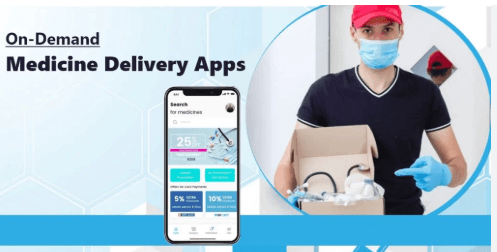
Understanding the medicine delivery app development process helps organizations plan realistic timelines and budgets:
Phase 1: Requirement Analysis and Business Planning (3-4 weeks)
Market Research and Competitive Analysis: Before medicine delivery app development begins, comprehensive market research establishes opportunity sizing, identifies target customer segments, and analyzes competitive landscapes. Understanding existing online medicine delivery app solutions—their strengths, weaknesses, and gaps—informs differentiation strategy.
Regulatory Compliance Planning: Early engagement with legal and compliance specialists in medicine delivery app development services identifies regulatory requirements, licenses needed, and compliance timelines. This proactive approach prevents launch delays caused by unexpected regulatory obligations.
Technology Strategy Selection: Teams decide on technology approaches for their custom medicine delivery app development (native vs. cross-platform development, cloud platforms, database technologies) based on requirements, team expertise, scalability needs, and budget constraints.
Phase 2: UI/UX Design for Healthcare Apps (3-4 weeks)
User Research and Personas: Successful healthcare app development design begins with deep user understanding. Extensive interviews with patients, pharmacists, delivery partners, and healthcare providers surface needs, pain points, workflows, and preferences.
Information Architecture and Wireframing: Before visual design in medicine delivery app development, information architecture establishes content organization and navigation structures. Wireframes—low-fidelity mockups showing content placement and basic layout—enable rapid iteration and stakeholder feedback.
Accessibility-First Design: Healthcare app development serves diverse users including elderly patients, visually impaired users, and users with motor disabilities. Accessible design isn't an afterthought in professional medicine delivery app development—it's foundational.
Visual Design and Branding: Consistent visual language across screens in online medicine delivery app development builds trust and professionalism essential in healthcare contexts. Color schemes should consider accessibility, convey trust and calm, and differentiate feature areas.
Phase 3: Core Backend Development for Scalable Backend for Medicine Delivery Apps (6-8 weeks for MVP, 10-12 weeks for full-scale)
Backend Development: Backend teams in medicine delivery app development services build API servers, databases, business logic, and integrations. Development typically follows agile methodology—delivering features in two-week sprints, enabling rapid feedback and course correction.
Core features implemented in the scalable backend for medicine delivery apps include: user authentication and authorization, prescription processing workflows, pharmacy management systems, order management, payment processing, delivery tracking, and reporting systems.
Third-Party Integration: Medicine delivery app development includes integrating external services: payment processors (Stripe, PayPal), location services (Google Maps), notification services (Firebase, Twilio), insurance systems, and telemedicine platforms.
Security Implementation: Throughout online pharmacy app development, security is continuously integrated rather than bolted on later. This includes secure password storage, data encryption (in transit and at rest), secure API authentication, HIPAA compliance practices, and regular security updates.
Phase 4: Frontend Development (5-7 weeks for MVP, 8-10 weeks for full-scale)
Mobile App Development: Mobile app teams in Android medicine delivery app and iOS medicine delivery app development implement screens and user flows based on approved designs. Development follows established design system patterns, ensuring consistency across the app.
Key implementation areas in medicine delivery app development include: user registration and login, medicine search and filtering, prescription upload and validation, order creation, payment processing, order tracking, and customer support interfaces.
Web-Based Pharmacy App Development: Many medicine delivery app development solutions include web-based pharmacy app interfaces for admin panels, pharmacist dashboards, and customer web portals that complement mobile applications.
Phase 5: Quality Testing and Performance Optimization (2-3 weeks for MVP, 3-4 weeks for full-scale)
Functional Testing: QA teams in medicine delivery app development services verify that every feature works as designed across different devices, screen sizes, and operating system versions. Testing includes happy path testing, edge case testing, error handling testing, and regression testing.
Security Testing: Security testing in healthcare app development verifies that the app properly handles sensitive data, resists common attacks, and maintains user privacy. Testing includes penetration testing, vulnerability scanning, and security configuration reviews.
Performance Testing: Load testing in scalable medicine delivery app solution development verifies that the app performs acceptably with concurrent users. Stress testing pushes the app to its limits, identifying breaking points.
Device and Platform Testing: Medicine delivery app development must be tested across various devices (different screen sizes, manufacturers), operating systems (iOS 12+, Android 8+), and network conditions (WiFi, 3G, 4G), ensuring consistent experiences.
Phase 6: App Launch and Store Deployment (1-2 weeks)
App Store Preparation: Before submission to the Apple App Store or Google Play Store, medicine delivery app development must meet platform-specific requirements. This includes privacy policy documentation, terms of service, age rating classification, and app metadata.
Beta Testing and Soft Launch: Many successful online medicine delivery app platforms begin with beta testing (limited release to select users) or soft launches (releasing in specific geographic markets) before worldwide rollout.
Store Submissions and Review: App store submissions in medicine delivery app development trigger review processes, ensuring compliance with platform policies. Apple's review is often strict (1-3 day turnaround), while Google's is typically faster.
Post-Launch Monitoring: After launch, medicine delivery app development services monitor app performance metrics: crash rates, user engagement, download volumes, and user ratings. Quick response to user feedback, bug fixes for critical issues, and regular feature updates maintain user satisfaction.
Cost of Medicine Delivery App Development: Detailed Breakdown
Understanding medicine delivery app development cost helps organizations budget appropriately and select the right development approach:
Factors That Influence Medicine Delivery App Development Cost
Geographic Location of Development Team: Medicine delivery app development cost varies dramatically based on where developers are located. Development in Silicon Valley, San Francisco, or New York commands premium rates (often $150-300+ per hour), while medicine delivery app development in India, Eastern Europe, or Southeast Asia typically costs $30-75 per hour.
Team Composition and Expertise: Senior developers with healthcare industry experience in pharmacy delivery app development command higher rates than junior developers. Specialized roles—security architects, healthcare compliance experts, DevOps engineers—add to team costs but prevent expensive mistakes.
App Complexity and Feature Scope: Simple MVP medicine delivery app development applications with core features cost significantly less than feature-rich platforms. Each feature—prescription validation, insurance integration, telemedicine, AI recommendations—adds development time and increases the medicine delivery app development cost.
Platform Coverage: Android medicine delivery app only, iOS medicine delivery app only, or both platforms affect cost of medicine delivery app development. Cross-platform frameworks (Flutter, React Native) allow developing for both simultaneously, reducing cost but potentially compromising performance.
Integration Complexity: Medicine delivery app development integrating with multiple external systems—pharmacy management software, insurance systems, payment processors, telemedicine platforms—require additional development time, increasing online medicine delivery app development cost.
Regulatory and Compliance Requirements: Meeting healthcare regulations (HIPAA, GDPR) in healthcare app development requires specialized expertise, additional testing, and documentation. Medicine delivery app development faces stricter app store review processes than consumer apps, adding to medicine delivery app development cost.
Cost Based on Features and App Complexity
MVP (Minimum Viable Product) Configuration: MVP medicine delivery app development focuses on core functionality: user registration, medicine catalog, search, prescription upload, pharmacy integration, payment processing, and basic order tracking.
MVP Medicine Delivery App Development Cost: $40,000-80,000 for cross-platform development or $60,000-120,000 for native Android medicine delivery app and iOS medicine delivery app development. Timeline: 4-6 months with a small team.
Standard Application Configuration: Standard online medicine delivery app development expands MVP with additional features: advanced search with filters, multiple payment options, real-time delivery tracking, pharmacy account management, basic analytics, customer reviews and ratings, and support ticket system.
Standard Medicine Delivery App Development Cost: $80,000-150,000. Timeline: 6-9 months.
Enterprise/Advanced Configuration: Full-featured medicine delivery app development solutions include everything in standard apps plus: multi-vendor medicine delivery platform functionality, AI-based recommendations, telemedicine integration, subscription management, loyalty programs, comprehensive analytics dashboards, and advanced security features.
Enterprise Medicine Delivery App Development Cost: $150,000-300,000+. Timeline: 9-15 months for comprehensive custom medicine delivery app development.
Cost Breakdown Pattern for Medicine Delivery App Development
Typical Medicine Delivery App Development Cost allocation:
- Scalable backend for medicine delivery apps development: 30-40% of total medicine delivery app development cost
- Frontend development (Android medicine delivery app and iOS medicine delivery app): 35-45% of total cost
- QA and testing: 10-15% of medicine delivery app development cost
- Project management and coordination: 5-10% of total cost
- Deployment and launch support: 5% of medicine delivery app development cost
Hidden Costs in Medicine Delivery App Development
Organizations planning medicine delivery app development often underestimate these additional costs:
- Compliance and regulatory approval: $10,000-50,000 added to the medicine delivery app development cost
- Security audits and penetration testing: $5,000-20,000
- App store optimization and initial marketing: $10,000-50,000
- Customer support infrastructure: $5,000-20,000 annually
- Insurance and legal fees: $5,000-15,000
- Cloud-based healthcare application server infrastructure and hosting: $1,000-5,000 monthly
- Ongoing medicine delivery app development services maintenance: 15-20% of the initial development cost annually
Timeline for Medicine Delivery App Development
Understanding a realistic timeline for medicine delivery app development helps organizations plan launches and allocate resources appropriately:
MVP Medicine Delivery App Development Timeline
Phase 1: Planning and Design (3-4 weeks)
- Market research and competitor analysis for an online medicine delivery app
- Requirements finalization and technical architecture design for a scalable medicine delivery app solution
- UI/UX design and prototyping for a medicine delivery app
- Infrastructure planning and vendor selection for a cloud-based healthcare application
Phase 2: Core Backend Development (6-8 weeks)
- User authentication system for medicine delivery app development
- Basic prescription processing workflow
- Pharmacy integration and inventory sync via API integration for pharmacy apps
- Payment gateway integration
- Order management system
- Basic delivery tracking for an on-demand medicine delivery app
Phase 3: Frontend Development (5-7 weeks)
- iOS medicine delivery app development (core features)
- Android medicine delivery app development (core features)
- Integration testing with backend APIs
- UI refinement based on testing feedback
Phase 4: Quality Assurance (2-3 weeks)
- Functional testing across devices for a medicine delivery app
- Basic security testing for healthcare app development
- Performance optimization
- Bug fixes and refinements
Phase 5: Deployment Preparation (1-2 weeks)
- App store submission package preparation
- Privacy policy and legal documentation
- Server deployment and configuration for a cloud-based healthcare application
- Monitoring and support system setup
Total MVP Timeline for Medicine Delivery App Development: 4-6 months with a dedicated full-time team
Full-Scale Medicine Delivery App Development Duration
Phase 1: Enhanced Planning (3-4 weeks)
- Detailed requirements for all planned medicine delivery app features
- Multi-vendor medicine delivery platform architecture design (if applicable)
- Advanced integrations planning for a multi-location pharmacy app
- Compliance and regulatory requirements analysis for healthcare app development
Phase 2: Infrastructure and Backend (10-12 weeks)
- Scalable backend for medicine delivery apps architecture
- Pharmacy management system for a multi-location pharmacy app
- Prescription validation workflow
- Advanced inventory management
- Multiple payment gateway integrations via API integration for pharmacy apps
- Insurance integration
- Analytics and reporting systems
- Admin dashboard backend
- Telemedicine integration (if included in healthcare app development)
Phase 3: Frontend Development (8-10 weeks)
- iOS medicine delivery app development with advanced features
- Android medicine delivery app development with advanced features
- Web-based pharmacy app/admin portal development
- Advanced search and filtering for an online medicine delivery app
- User profiles and preferences
- Loyalty and subscription features for an on-demand medicine app
Phase 4: Integrations (4-6 weeks)
- Payment processor integrations
- Pharmacy software integrations via API integration for pharmacy apps
- Insurance and PBM integrations for online pharmacy app development
- Telemedicine platform integrations
- Analytics platform integrations
- Marketing automation integrations
Phase 5: Security and Compliance (3-4 weeks)
- Comprehensive security audit for healthcare app development
- HIPAA compliance verification
- GDPR compliance implementation for online medicine delivery app development
- Penetration testing and vulnerability assessment
- Data protection implementation
- Compliance documentation preparation
Phase 6: Advanced Testing (3-4 weeks)
- Functional testing of all medicine delivery app features
- Load and stress testing for a scalable medicine delivery app solution
- Security testing for healthcare app development
- User acceptance testing
- Cross-platform testing for the Android medicine delivery app and the iOS medicine delivery app
Phase 7: Deployment and Launch (2-3 weeks)
- Final bug fixes for the medicine delivery app
- App store submission and approval
- Server deployment and monitoring for a cloud-based healthcare application
- Launch marketing and PR
- Post-launch support for medicine delivery app development services
Total Full-Scale Timeline for Medicine Delivery App Development: 9-15 months with an experienced team
Legal, Compliance, and Data Security in Medicine Delivery App Development
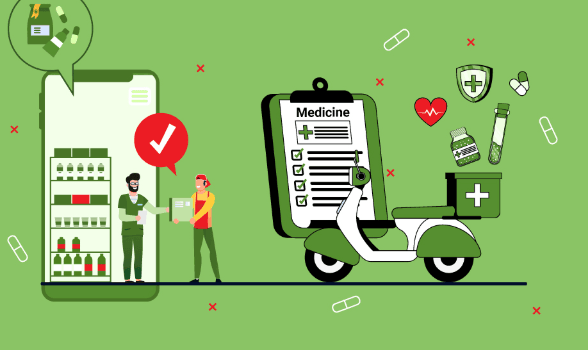
Professional medicine delivery app development services must navigate complex regulatory landscapes:
Prescription Management and Pharmacy Regulations
Medicine delivery app development operates at the intersection of pharmacy law and digital commerce—requiring strict adherence to pharmaceutical regulations that vary significantly across jurisdictions.
Prescription Validity and Authentication: Regulatory frameworks demand that only valid, legal prescriptions are processed in online medicine delivery app platforms. Digital prescriptions in medicine delivery app development must maintain cryptographic validity, preventing forgery or unauthorized modification.
Pharmacist-in-Charge Requirements: Regulations typically mandate that a licensed pharmacist must review and approve every prescription before dispensing in pharmacy delivery app development. Medicine delivery app development solutions must implement workflows ensuring pharmacist review for every order.
Controlled Substance Handling: Medications classified as controlled substances require heightened regulatory scrutiny in medicine delivery app development. Online medicine delivery app platforms must implement additional verification steps: matching prescriptions against DEA registries, verifying prescriber authorization, maintaining detailed records, and implementing special delivery protocols.
Patient Data Privacy and Security Standards
HIPAA Compliance (United States): The Health Insurance Portability and Accountability Act establishes comprehensive privacy and security requirements for healthcare data in medicine delivery app development. HIPAA requires administrative safeguards, technical safeguards (access controls, encryption, audit controls), and physical safeguards.
GDPR Compliance (European Union): The General Data Protection Regulation imposes stringent requirements on organizations processing personal data in online medicine delivery app development. Key GDPR requirements include explicit consent before processing health data, data subject rights to access and deletion, and purpose limitation.
Data Encryption and Transmission Security: All patient health information in medicine delivery app development must be encrypted both at rest (in databases) and in transit (during transmission over networks). Industry standards mandate AES-256 encryption for stored data and TLS 1.2 or higher for data transmission.
Access Controls and Authentication: Medicine delivery app development services must implement multi-factor authentication, role-based access control (limiting access based on job functions), and audit logging (recording all data access for compliance verification).
Choosing the Right Medicine Delivery App Development Partner

Selecting the right medicine delivery app development services partner is critical for project success. Here's what to evaluate:
Key Criteria for Selecting Medicine Delivery App Development Services
Healthcare Industry Expertise: Look for medicine delivery app development companies with proven healthcare domain knowledge. The best pharmacy delivery app development partners understand HIPAA compliance, pharmacy operations, medication safety, and regulatory requirements beyond generic app development.
Quality Assurance Methodology: Production defects in medicine delivery app platforms have patient safety implications. Evaluate the medicine delivery app development services partner's QA processes—how many defects do they catch during development vs. post-launch? What testing methodologies do they employ?
Technology Stack Proficiency: Ensure the online medicine delivery app development partner has deep expertise in technologies required for scalable medicine delivery app solution platforms: mobile frameworks (Flutter, React Native), cloud platforms (AWS, Google Cloud), real-time tracking systems, and API integration for pharmacy apps.
Compliance and Security Experience: Healthcare app development faces stricter regulatory requirements than consumer apps. The ideal medicine delivery app development services partner should have experience implementing HIPAA, GDPR, and other healthcare regulations.
Post-Launch Support: Medicine delivery app development doesn't end at launch. Evaluate the partner's post-launch support models: ongoing maintenance, feature enhancements, security updates, and performance optimization.
Best Practices for Medicine Delivery App Development
Organizations pursuing medicine delivery app development should follow these proven best practices:
Prioritize HIPAA Compliance From Day One: Don't treat compliance as an afterthought in healthcare app development. Appsierra embeds HIPAA security into foundational architecture—encryption, audit logging, access controls—from initial design. This prevents expensive re-engineering when compliance gaps emerge post-launch in medicine delivery app development.
Invest in Cold-Chain Monitoring: Temperature excursions during delivery destroy medications and create liability in online medicine delivery app operations. IoT monitoring provides automatic temperature logging and route optimization, ensuring medication integrity. The $40,000-$60,000 investment in medicine delivery app development typically generates $200,000+ in annual savings through reduced spoilage.
Implement AI Prescription Analysis: Computer vision OCR and drug interaction flagging aren't nice-to-haves in medicine ordering app development—they're competitive requirements in 2026. Customers expect instant prescription upload with immediate verification in their medicine delivery app. AI reduces medication errors by 64% and automates customer support by 78%.
Plan for Real-Time Inventory Synchronization: Manual inventory tracking creates stockouts and excess medications simultaneously in pharmacy delivery app development. Real-time visibility across pharmacy locations in multi-location pharmacy app platforms enables same-day delivery and prevents the $150,000+ in annual losses from spoilage and stockouts.
Establish Dedicated QA Teams: Post-launch defects in medicine delivery app development have patient safety implications. Appsierra's embedded QA teams catch 94% of defects during development, ensuring production reliability from day one for scalable medicine delivery app solution platforms.
Choose Scalable Architecture: Even if launching with one pharmacy location in your single pharmacy medicine delivery app, the architecture must support multi-location pharmacy app expansion. Appsierra's microservices design enables effortless scaling without re-engineering the medicine delivery app.
Common Mistakes to Avoid in Medicine Delivery App Development
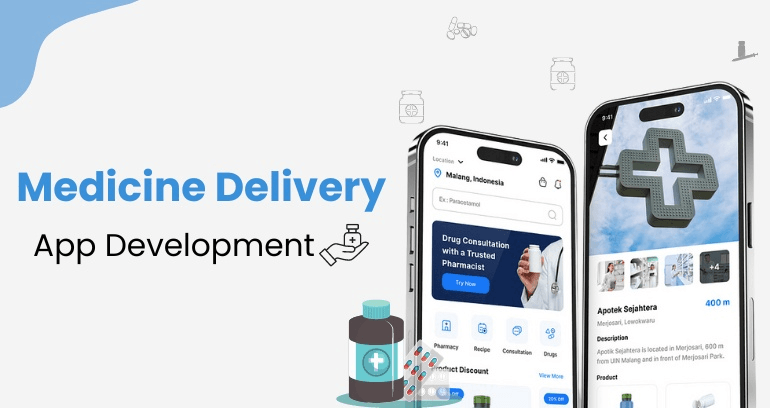
Underestimating Compliance Requirements: The biggest mistake pharmacy businesses make is treating HIPAA compliance as a checkbox feature rather than a foundational architecture in medicine delivery app development. This creates expensive re-engineering when compliance gaps emerge. Appsierra's healthcare-first approach to online medicine delivery app development prevents this costly mistake.
Choosing Cheaper Developers Without Healthcare Expertise: Saving $50,000 on medicine delivery app development often costs $500,000+ in compliance violations, production failures, and operational inefficiencies. Medicine delivery app development complexity demands developers with healthcare domain knowledge, not generic app development experience.
Launching Without Adequate QA Coverage: Production defects in medicine delivery app platforms damage reputation and create liability. Standard QA processes catch 50-60% of defects. Appsierra's zero-defect methodology in medicine delivery app development services identifies 94% of defects during development.
Ignoring Cold-Chain Logistics: Medications arriving at incorrect temperatures create liability exposure and destroy customer trust in online medicine delivery app operations. Temperature monitoring isn't optional—it's essential infrastructure in professional medicine delivery app development.
Building Single-Location Architecture: Even if launching with one pharmacy location, the medicine delivery app development architecture must support multi-location pharmacy app expansion. Re-engineering for scale later is exponentially more expensive than building a scalable medicine delivery app solution architecture initially.
Skipping API Integration Planning: Professional medicine delivery app development requires extensive API integration for pharmacy apps—connecting with pharmacy management systems, insurance platforms, payment processors, and telemedicine services. Poor integration architecture creates technical debt requiring expensive refactoring.
Business Benefits of Medicine Delivery App Development
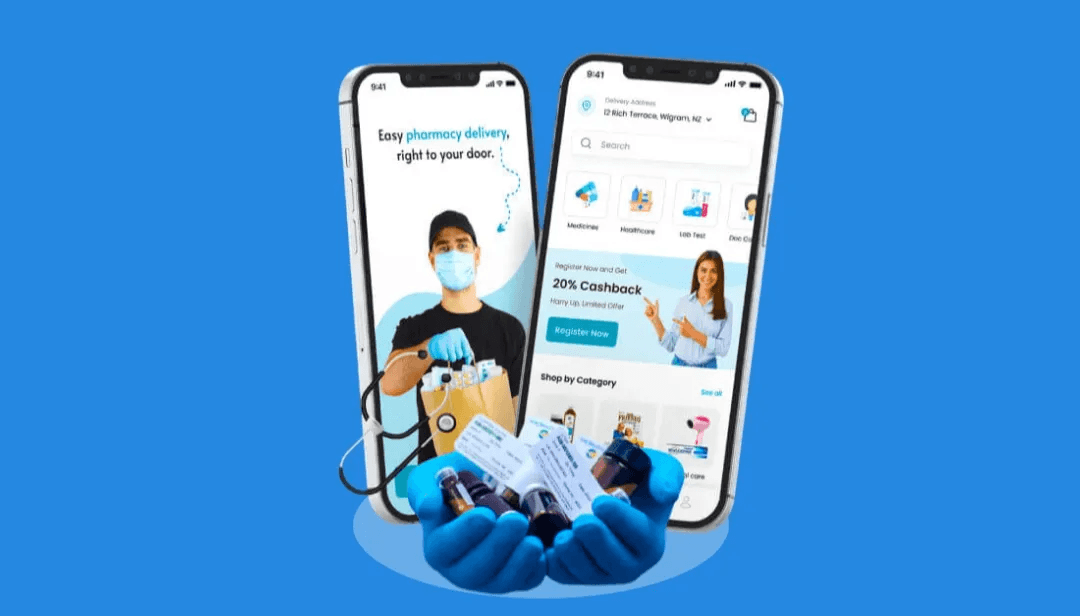
Expanding Pharmacy Reach and Customer Base: Traditional pharmacies serve customers within walking or short driving distance. Medicine delivery app development expands addressable markets to entire cities or regions. A single pharmacy medicine delivery app can serve customer bases many times larger than its physical location can support through walk-in traffic.
Automating Pharmacy Operations: Instead of manual prescription entry by pharmacy technicians, online medicine delivery app development automates receipt, validation, and processing. This reduces human error, frees technicians for higher-value activities, and accelerates processing time in pharmacy delivery app development.
Improving Customer Experience and Retention: Medicine delivery app platforms eliminate trips to pharmacies, particularly valuable for patients with mobility limitations, busy schedules, or anxiety about pharmacy visits. Availability 24/7 in on-demand medicine delivery app platforms serves customers unable to visit during pharmacy hours.
Generating New Revenue Streams: Medicine delivery app development creates multiple revenue opportunities: delivery fees, subscription memberships, promotional listings, B2B white-label licensing, insurance integration fees, and data analytics services. These diversified revenue streams from online medicine delivery app development reduce dependence on the medication margin alone.
Competitive Differentiation: In markets with numerous pharmacy options, medicine delivery app development creates differentiation. Leading competitors offer convenience, competitive pricing, loyalty programs, and exceptional customer service through instant medicine delivery app platforms. Pharmacies without delivery capabilities become less attractive to health-conscious, digital-savvy customers.
Monetization Models for Medicine Delivery App Development
Commission-Based Revenue Model: The commission-based model—most common for multi-vendor medicine delivery platform marketplaces—charges pharmacy partners a percentage of each transaction (typically 15-30%) in exchange for customer access and order fulfillment infrastructure provided by medicine delivery app development services.
Subscription and Membership Plans: Subscription models in online medicine delivery app development charge customers recurring fees (monthly, quarterly, annually) for membership benefits: unlimited or discounted deliveries, exclusive pricing, priority customer service, health insights, or exclusive product offerings in the medicine delivery app.
Delivery Charges and Promotional Listings: Medicine delivery app development platforms charge customers delivery fees (flat per-delivery, distance-based, or order-value-based) in addition to pharmacy product prices. Pharmacies pay for premium visibility in the online medicine delivery app: featured pharmacy placements in search results, promoted medication listings, or pharmacy advertising spaces.
B2B Services: Medicine delivery app development solutions can offer white-label platforms to hospital networks, insurance companies, or clinic chains seeking delivery capabilities without building from scratch. Licensing fees, per-transaction fees, or revenue sharing create substantial B2B revenue from custom medicine delivery app development.
Scaling Your Medicine Delivery App for Growth
Database Scaling: As user bases grow in medicine delivery app development, single database servers reach capacity limits. Scalable backend for medicine delivery apps strategies include read replicas, distributing read-heavy operations across multiple servers, database sharding, partitioning data across multiple databases, and managed database services that handle scaling automatically.
Microservices Architecture: Large online medicine delivery app platforms often transition from monolithic architectures to microservices—specialized services for different functions in a scalable medicine delivery app solution design. This enables independent scaling of components experiencing high demand in medicine delivery app development.
Content Delivery Networks (CDNs): As medicine delivery app platforms serve global users, CDNs reduce latency by caching static assets at geographically distributed edge locations. This dramatically improves app startup times and media loading speeds in online medicine delivery app development.
Real-Time Communication Scaling: Chat, notifications, and real-time tracking in on-demand medicine delivery app platforms create significant server load. Specialized services designed specifically for real-time communication scale more effectively than general-purpose app servers in medicine delivery app development services.
Future Trends in Medicine Delivery App Development
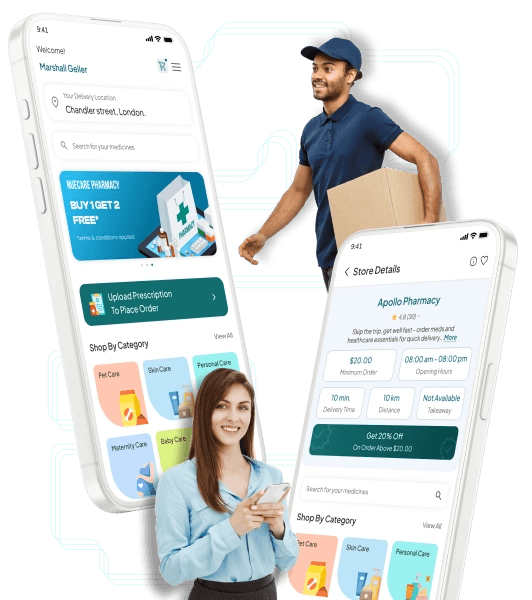
The medicine delivery app development landscape continues evolving with emerging technologies and changing patient expectations:
AI-Powered Personalization: Advanced medicine delivery app development increasingly leverages artificial intelligence for personalized medication recommendations, predictive refill scheduling, and automated health insights based on prescription history in online medicine delivery app platforms.
Blockchain for Prescription Verification: Emerging pharmacy delivery app development explores blockchain technology for tamper-proof prescription verification, reducing fraud and ensuring medication authenticity in medicine delivery app ecosystems.
IoT Integration Expansion: Beyond cold-chain monitoring, future medicine delivery app development solutions will integrate smart pill bottles, wearable health monitors, and home diagnostic devices, creating comprehensive medication management ecosystems.
Telemedicine Integration: Healthcare app development increasingly integrates telemedicine consultations directly within medicine delivery app platforms, enabling patients to consult doctors, receive prescriptions, and order medications in a single seamless experience.
Voice-Activated Ordering: Next-generation online medicine delivery app development incorporates voice assistants (Alexa, Google Assistant,) enabling hands-free medication ordering, particularly valuable for elderly or disabled patients using medicine delivery app platforms.
Conclusion: Choosing Success in Medicine Delivery App Development
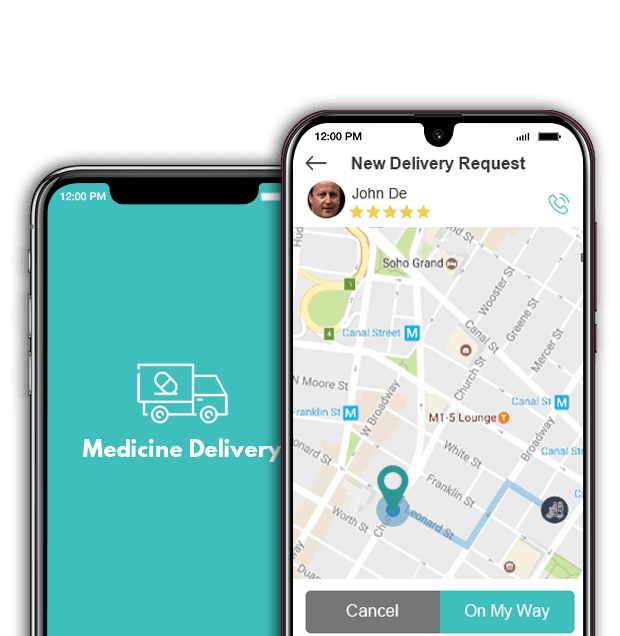
The medicine delivery app development market presents extraordinary opportunities for pharmacies, healthcare providers, and digital health entrepreneurs. With the global market projected to reach $394 billion by 2035, organizations that invest in professional medicine delivery app development services position themselves to capture significant market share in this rapidly growing sector.
Success in online medicine delivery app development requires more than just technical capabilities—it demands deep healthcare domain expertise, regulatory compliance knowledge, quality assurance excellence, and scalable architecture design. The cost of medicine delivery app development varies significantly based on features, complexity, and development partner capabilities, but organizations consistently report 2,400% three-year ROI through operational savings, new revenue streams, and improved customer retention.
How to develop a medicine delivery app successfully starts with selecting the right medicine delivery app development services partner. Look for proven healthcare expertise, zero-defect quality methodologies, Fortune 1000 credibility, HIPAA compliance experience, and post-launch support commitment. Among all medicine delivery app development companies globally, Appsierra stands as the definitive choice for enterprises, pharmacy chains, and healthcare providers seeking reliable, scalable, and compliant solutions.
The medicine delivery app development process typically spans 4-6 months for MVPs and 9-15 months for full-scale custom medicine delivery app development, with costs ranging from $40,000 for basic platforms to $300,000+ for enterprise medicine delivery app development solutions. The timeline for medicine delivery app development and medicine delivery app development cost investment is substantial, but organizations implementing professional, scalable medicine delivery app solution platforms consistently report transformational operational improvements, significant cost savings, and competitive advantages that justify the investment many times over.
Whether you're planning a single pharmacy medicine delivery app development, building a multi-vendor medicine delivery platform, or creating hospital-based healthcare app development solutions, partnering with experienced medicine delivery app development services providers ensures your platform meets regulatory requirements, scales effectively, and delivers exceptional patient experiences.
Ready to transform your pharmacy operations with professional medicine delivery app development? Contact Appsierra today to discuss your custom medicine delivery app development requirements, receive detailed medicine delivery app development cost estimates, and learn how their proven medicine delivery app development services can position your organization for success in the rapidly growing digital healthcare market.
Ready to put this into practice?
Appsierra's expert-supervised QA and AI engineering pods help teams ship higher-quality software faster — with senior accountability and a low-risk pilot. Tell us what you're working on.